Laser vs. Sandblasting vs. Chemical Stripping: A Pro Who Uses Both Compares
This guide contains affiliate links. As an Amazon Associate I earn from qualifying purchases. Disclosure.
I run a handheld laser cleaner (an XlaserLab Q1) and I also do media blasting and sandblasting. Owning both means I don't have a reason to pretend one method wins every job. Each one fits different jobs, and here's how I think about it.
How each method works
- Laser cleaning pulses a focused beam at the surface. Rust, paint and grime absorb the energy and vaporize or flake off (ablation). Most bare metal reflects much of the beam back, so a correctly tuned laser takes off the contaminant without much damage to the base metal.
- Abrasive (media) blasting fires particles (sand, garnet, crushed glass, aluminum oxide, walnut shell, plastic, soda and so on) with compressed air. It physically wears the coating away. Choosing the media changes how aggressive it is.
- Chemical stripping uses solvents or caustics that soften or dissolve the coating so it can be scraped or washed off. Rust removers use acids or chelating agents instead.
Side-by-side
| Laser | Media / sandblasting | Chemical | |
|---|---|---|---|
| Best at | Rust, thin coatings, selective spot work, delicate or in-place parts, weld prep | Thick paint and heavy scale over large areas, complex castings in a cabinet, creating an anchor profile | Detailed woodwork and trim, small DIY jobs, places you can't bring equipment |
| Surface effect | Little to no profile; base metal mostly untouched when settings are right | Removes some base material and roughens it; aggressive media can warp thin sheet metal or erode wood and soft masonry | No abrasion, but can raise wood grain, stain or etch some surfaces |
| Waste | Fumes and fine particulate (needs extraction); no media to clean up | Spent media plus removed coating, often a lot | Sludge and rinse water that may be hazardous waste |
| Speed on thick coatings | Slow on thick, multi-layer paint | Usually fastest | Slow; dwell time and multiple applications |
| Main hazards | Class 4 beam (eyes/skin), fumes | Silica dust (with sand), noise, rebound, high-pressure air | Skin/eye burns, vapors; some strippers are tightly regulated |
Where blasting wins
When a part is coated in thick paint or has lots of carved detail, a blast cabinet is hard to beat. The video below is from my cabinet: media blasting taking the old finish off a carved wood scroll. On wood you need a soft media and light pressure, or the soft grain erodes faster than the hard grain.
Where the laser wins
- Work done in place, like railings, machinery and outdoor fixtures, where containing blast media is impractical.
- Parts where you want to keep the base surface as it is, such as tight tolerances, precision surfaces or historic metal.
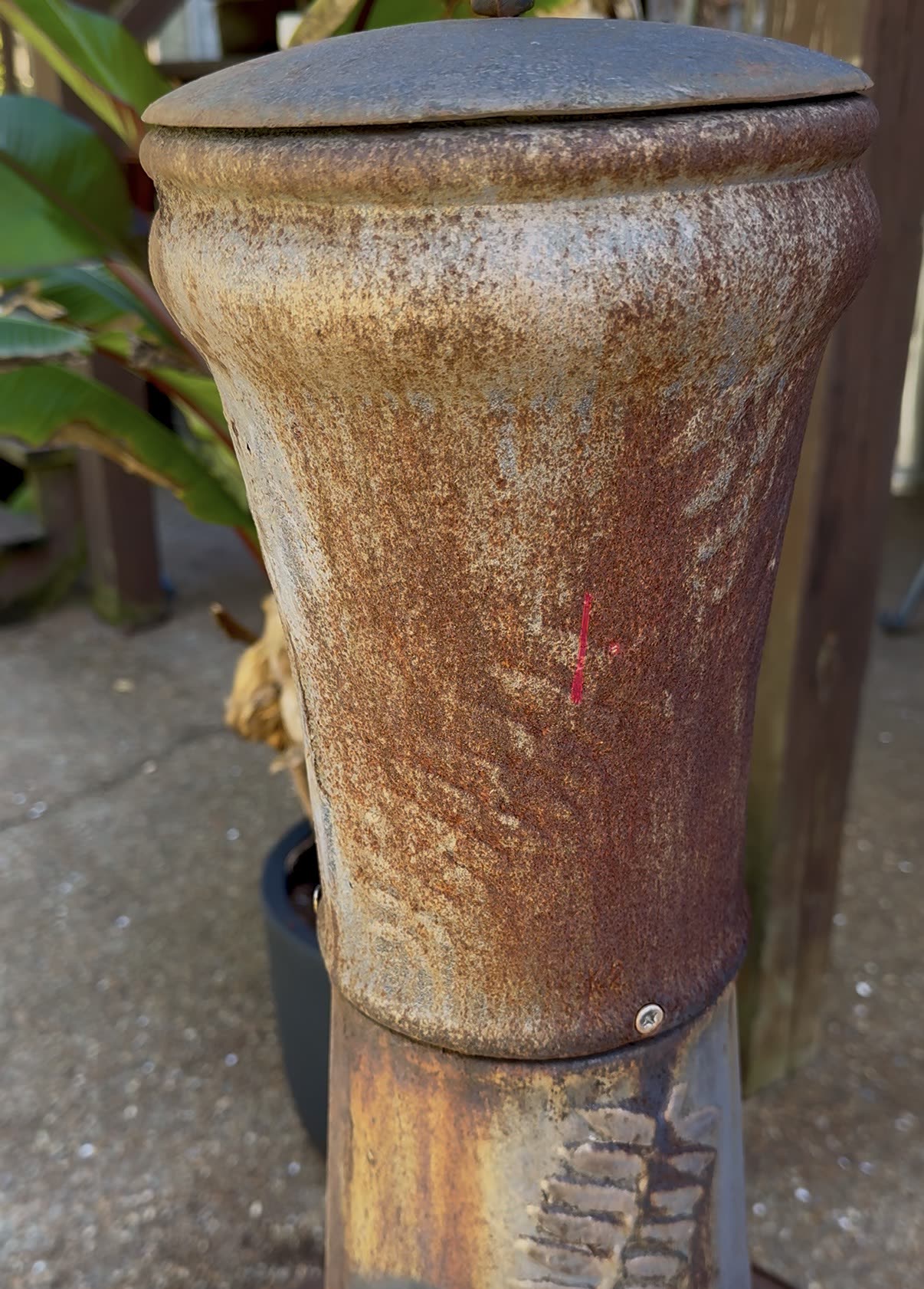
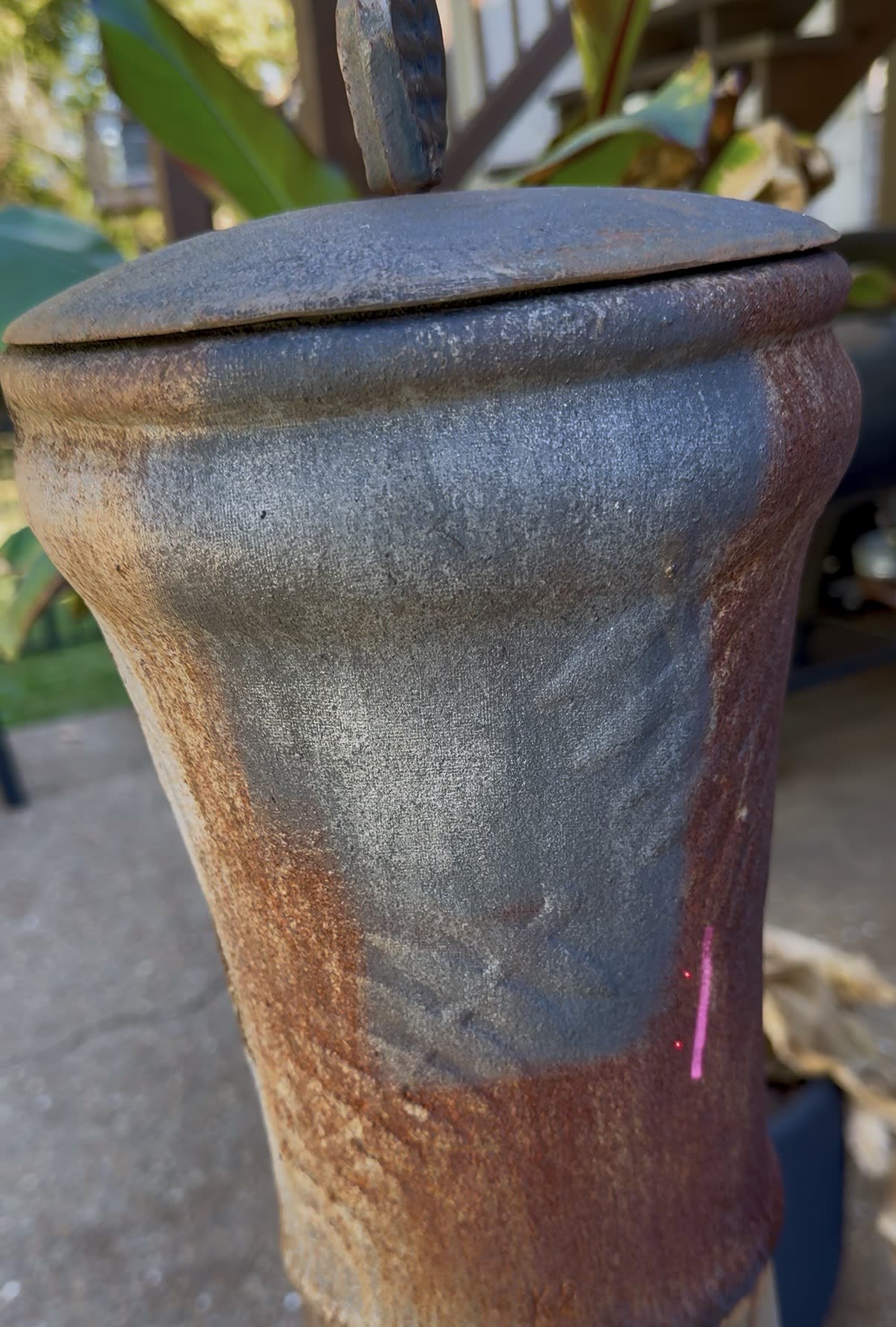
- Selective cleaning: one area, a weld seam, or a band like the one in the photos above, with clean edges.
The laser also works on some non-metal surfaces. Here it's lifting weathering and growth off a wooden post:
Where chemicals still make sense
For a single piece of furniture or trim at home, a good stripper and some patience cost far less than equipment and avoid abrasion. Methylene chloride paint strippers are banned for consumer use by the EPA, so read labels and look for safer formulations.
Products for this job
- Benchtop sandblasting cabinet For small parts and carved pieces like the scroll in the video. Check price on Amazon
- Aluminum oxide blasting media Aggressive, reusable media for metal in a cabinet. Check price on Amazon
- Walnut shell blasting media Soft media for wood and delicate surfaces. Check price on Amazon
- Citristrip paint stripping gel A methylene-chloride-free stripper for furniture and trim. Check price on Amazon
How I choose
- What's the substrate, and how much of it can I afford to lose?
- How thick is the coating?
- Can the part come to the shop, or does the work happen on site?
- Where do the waste, dust and fumes go?
- Is there lead or another hazardous coating?
Near Nashville and want it done professionally? I do laser cleaning and media/sandblasting through Music City Laser Cleaning.