Restoring Cast Iron: Skillets, Garden Pieces and Outdoor Fixtures
This guide contains affiliate links. As an Amazon Associate I earn from qualifying purchases. Disclosure.
Cast iron is very forgiving to restore. It's thick, and surface rust rarely ruins it. Cracks and warps are different: a cracked skillet should be retired.
Cookware
- Strip old seasoning and gunk: a lye bath (sodium hydroxide; oven cleaner works the same way) or electrolysis. Lye is caustic, so wear gloves and goggles and never use it on aluminum.
- Remove rust: a short soak in a 50/50 white vinegar and water mix, checked often (an hour or so is often enough; long soaks etch the iron), or scrubbing with steel wool.
- Dry immediately on a burner, then season: wipe on a very thin layer of cooking oil, wipe it nearly all back off, and bake it upside down at a high oven temperature for about an hour. Repeat several times.
Avoid stripping cookware in a self-cleaning oven cycle or a fire. The extreme, uneven heat can warp or crack it.
Outdoor cast metal
Fireplaces, benches, urns and railings can be cleaned by wire brushing, blasting or laser, then primed and painted with a high-heat or exterior coating as appropriate. Here's a laser pass on a rusty cast-metal outdoor fireplace. The gray band is bare metal:
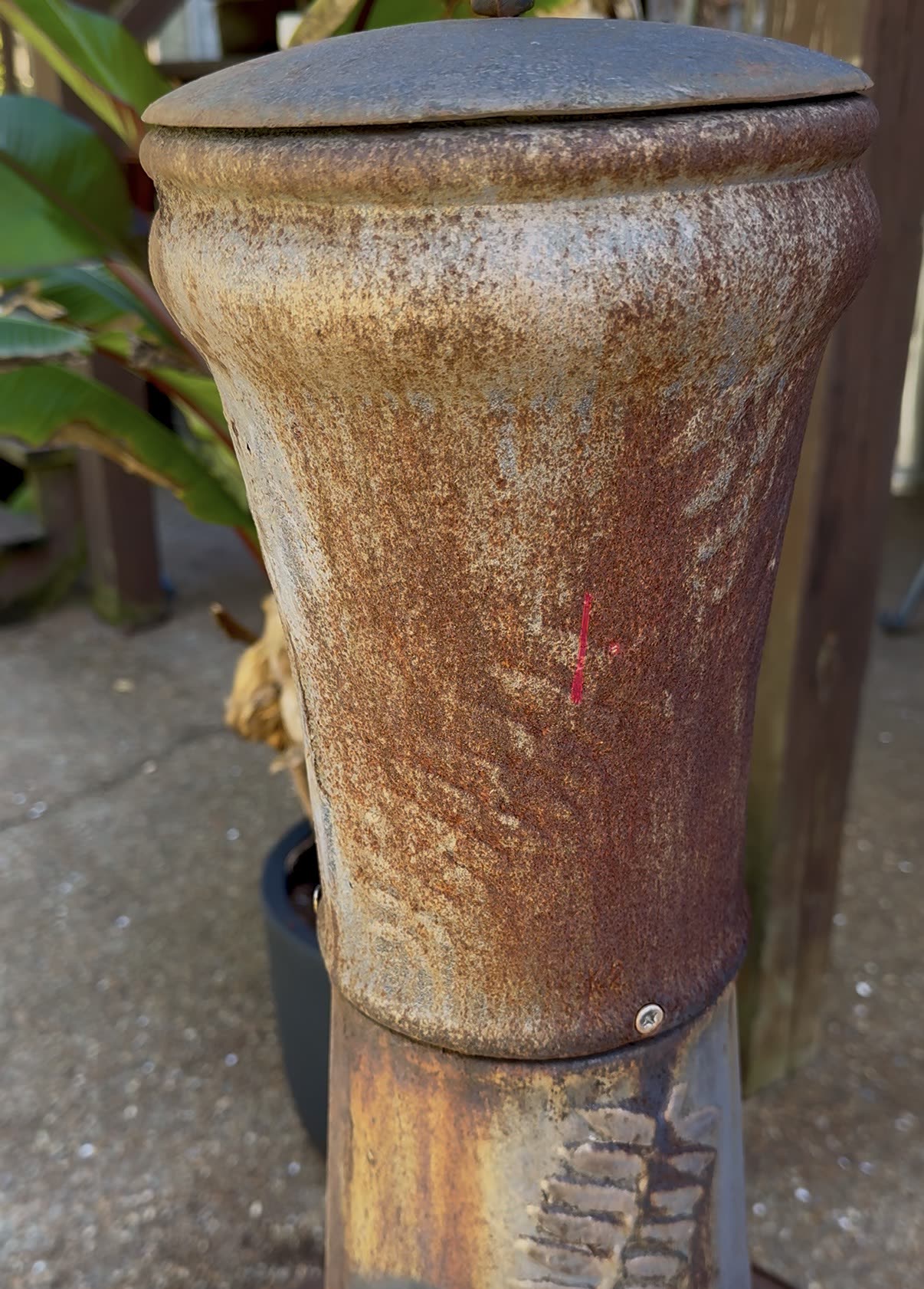
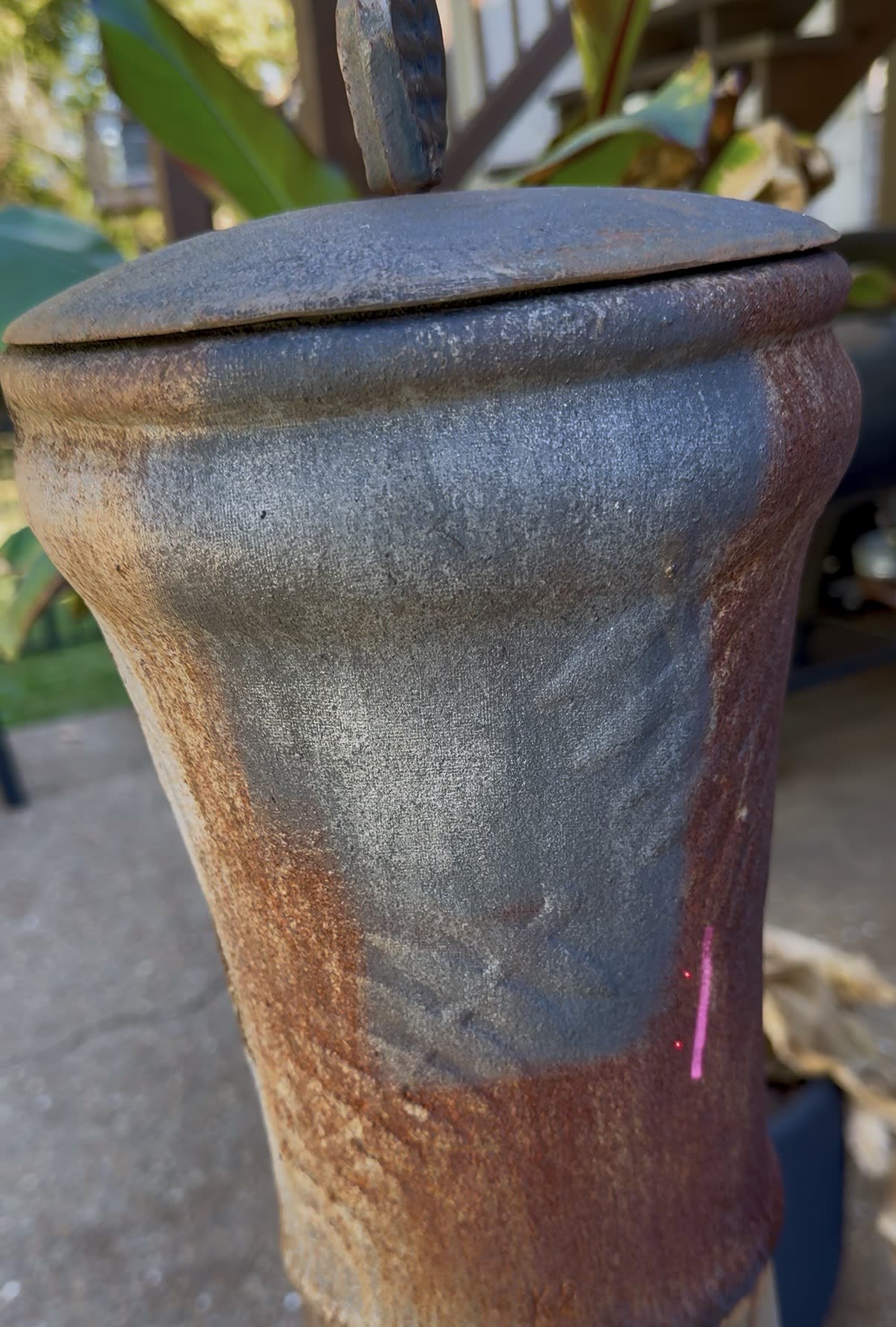
Bare cast iron rusts quickly outdoors, so prime or oil it soon after cleaning.
Products for this job
- Evapo-Rust ER012 (1 gallon) Gentle rust soak for cookware and cast parts. Check price on Amazon
- Rust-Oleum High Heat spray, Bar-B-Que Black For outdoor cast metal like fireplaces and grills (not cookware). Check price on Amazon
- Cast iron seasoning oil For rebuilding seasoning on cookware. Check price on Amazon
- Wire cup brush for angle grinder Speeds up cleaning outdoor cast pieces. Check price on Amazon
Laser eye safety: Handheld laser cleaners are typically Class 4 lasers. Direct and reflected beams can cause permanent eye injury and burns. Everyone in the area needs eyewear rated for the laser's specific wavelength and optical density (see ANSI Z136.1 / the manufacturer's manual), the work zone must be controlled, and ablation fumes should be extracted.